

How Long Should a Password Be?
On the Length of Private Key Passwords
As of 2021, a 14-character ASCII password mixing alphanumeric characters and symbols was necessary and sufficient. Considering the improvement in computing power, increasing it by one character every 10 years would be enough.
Password Strength
ASCII printable characters consist of 94 characters, providing an information density (Shannon entropy) of only about log2 94 ≈ 6.55 bits per character.
In real-world scenarios, the actual entropy of passwords using ASCII alphanumeric characters and symbols drops below 5 bits, and this does not even account for the probability of early cracked cases due to sheer luck.
If we represent password strength as the number of years y required to crack it:
y = 2S(n - 8) m / 525949

m: Current time required to crack an 8-character password of ASCII alphanumeric characters and symbols [minutes]
n: Password length (number of characters), n > 0
S: Effective entropy per character [bits (shannon)]
y: Number of years required to crack the password [years]
Since there are 94 printable ASCII characters and the theoretical entropy is log2 94 ≈ 6.55 bits:
However, due to biases in user character choices, S drops to around 5 bits, so:
Since a password might happen to be cracked early by chance, if we introduce a safety factor of 1024 (taking into account the probability of encountering such bad luck, which corresponds to a statistical 3.3σ), we get:
A cracking time of 20 years... a 14-character password seems quite sufficient.
However, assuming computing power doubles every two years, passwords become twice as easy to crack every two years. To counter this, we simply need to increase the cracking difficulty faster than the growth of computing power. In other words, if S = 5 bits, adding a single character makes it 32 times harder to crack. Therefore, adding one extra character now and then one additional character every 10 years would suffice. If characters are chosen completely at random mechanically, S would be around 6.55 bits, making it even more secure.
...Or So I Thought
Back in 2021, I believed that adding one character every ten years would be enough. Since then, however, parallel computing power—driven heavily by GPUs pushed forward by cryptocurrency mining—has surged. On top of that, the optimization of search orders through the advancement of Large Language Models (LLMs, or AI) has become a reality.
Thanks to these game changers, m has effectively accelerated by 4 to 5 orders of magnitude. As of 2026, a value like m = 0.001 has become realistic. Consequently, cracking times are no longer on the order of years, but rather a matter of hours.
This shift is not something that can be resolved by simply adding one or two characters. Even with a completely randomized selection, a 14-character password would only hold out for about a year—a precarious situation. We are beginning to see the absolute limits of a strategy that relies solely on increasing length within the narrow confines of the ASCII character space.
Meanwhile, UTF-8 has already become the de facto standard on the Web, and it is now common practice to leave long, complex passwords to password managers.
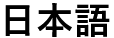
For instance, combining JIS Level 1 (2,965 characters), Level 2 (3,390 characters), Hiragana, Katakana, and symbols brings the pool of available characters to 6,879. The theoretical entropy per character S reaches log2 6879 ≃ 12.7 bits. Even if user vocabulary biases cause a significant drop in entropy down to around S ≃ 9 bits, the strength per character is still about 24 = 16 times greater compared to the S ≃ 5 bits of ASCII alphanumeric symbols.
y = 2S(n - 8) m x8 / 525949
m: Current time required to crack an 8-character password of ASCII alphanumeric characters and symbols [minutes]
x: Character space expansion ratio relative to ASCII alphanumeric characters (94 characters) (e.g., 6879/94)
n: Password length (number of characters), n > 0
S: Effective entropy per character [bits (shannon)]
y: Number of years required to crack the password [years]
The effect of expanding the character space for up to 8 characters is evaluated by x8, and adjustments for lengths beyond that are handled by S.
As of 2026, assuming m = 0.001 and using a character set of 6,879 characters within UTF-8, even an 8-character UTF-8 password yields the following:
If we consider this sufficient for the time being, given S = 9 bits, adding a single character increases the difficulty by a factor of 512. Assuming that the growth rate of computing power remains at doubling every 2 years, the cracking capability increases by 1 bit every 2 years. Therefore, it would be enough to add one character every 18 years, which corresponds to the 9 bits of information entropy gained per character. Of course, if characters are chosen completely at random mechanically, S ≃ 12.7 bits, meaning that adding one character would cover 12.7 × 2 → so we would only need to add one character every 25 years.
If we expand the pool to about 11,233 characters by including Greek and Cyrillic scripts, an 8-character UTF-8 password results in:
As demonstrated, expanding the character space used for passwords literally scales their strength exponentially. Statistically, this also deters attacks originating from non-Japanese environments. Even without that advantage, if we expand the character space further to include, for example, Hindi or emojis, attackers would virtually have to accommodate the entire printable space of UTF-8 (approximately 1,114,112 characters). At that point, even an 8-character password becomes utterly hopeless for an attacker (y > 7 × 10²⁰ years).
Conclusion
As of 2026, if you use ASCII mixing alphanumeric characters and symbols, 15 to 16 characters might still hold up for a little while longer—provided they are mechanically and completely randomized. However, the day when the standard 16-character range of ASCII alphanumeric symbols is no longer secure is rapidly approaching. Isn't it about time that information and communication systems are redesigned to naturally support passwords in UTF-8? 😎